Shallow Water Blackfish: Shoreline Strategies and Steely Rigging

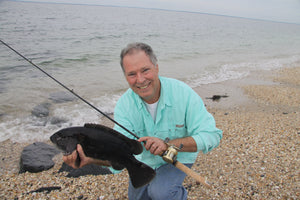
You can catch some solid blackfish from shore if you put in some time and effort. Be sure to check out any blackfish possibilities you come across – jetties, shoreline rocks, and older wooden docks are all strong possibilities. OutdoorTom.com photo.
When most anglers picture Long Island blackfishing, they envision a boat double-anchored in 30- to 60-foot depths, using heavy sinkers and stiff rods to hoist "bulldogs" from their lairs. While that classic deep-water image fits this pugnacious species, it overlooks a premier autumn opportunity. Before staging in deep water, tautog visit shallow, nearshore haunts to feast on green crabs, blue mussels and other crunchy crustaceans. From mid-October through early November, shore-bound anglers applying specialized techniques can score big, often with a premium stretch of jetty or dock completely to themselves.
Succeeding from shore begins with reading structure analytically. Blackfish depend entirely on hard structure for food and safety from strong tidal currents. When scouting, look for structural anomalies: a stretch of bulkhead with a busted plank, tilted timber pilings, a masonry wall jutting out into the current, or a sharp underwater drop-off. Older pier pilings encrusted with barnacles and blue mussels provide a natural blackfish buffet. Inlet jetties, boulder-strewn points, older wooden or cement piers, and rocky coves are all potential targets.
Long Island’s east end is a paradise for foot-bound prospecting. The massive boulder labyrinths of the ocean jetties at Shinnecock and Moriches inlets, as well as the smaller stone jetties at Mattituck Inlet, invite a stampede of hungry 'tog right up tight to the rocks on an early morning or evening incoming tide. For a gentler pace, the boulder-strewn banks of steep-sloping North Fork points offer a natural highway for migrating blackfish moseying into and then out of the shallows. For a pure vertical presentation, old timber docks along Peconic Bay provide ideal pockets of slack water where you can drop a bait right in front of your target’s mouth.

Blackfish jigs are a simple and effective way to present your bait from the shore. OutdoorTom.com photo.
Accessible docks and bulkheads are especially valuable real estate to Long Island east end blackfish fans. That’s because they allow you to fish vertically or make short, controlled flips right next to the pilings. Since presenting in this environment doesn’t require you to drag a rig across acres of tackle-eating bottom, you can use significantly lighter gear than a deep-water boat trip requires. We suggest spooling a sturdy spinning reel like the Daiwa 2025 Ballistic MQ LT 4000D-CXH with 20- to 30-pound-test braided line, pair it with a sensitive, medium-heavy, 7-foot, Jigging World Onyx JW-OX701S: MH-inshore spinning rod, and you are pretty much set to go.
When you get down to the nitty-gritty, the true secret to positioning for white-chins is understanding how these fish behave in a moving tide. Look for 'tog in the slack-water eddies created right behind a large piling, jetty out-cropping or bulkhead corner where they can hold comfortably while the main current washes crabs right past their noses. Realize, too, that blackfish will swing from one side of an obstruction to the other as the tide changes; if they bit steadily on the incoming tide, check the opposite side of your structure once the ebb begins, and vice versa.
In terms of rigging for these battlers, everything must be streamlined when fishing from shore. Traditional heavy boat rigs are too bulky and snag-prone for these locations. Better options are a single-hook bottom rig or a blackfish jig. Conversely, a 3/4- to 2-ounce blackfish jig is the premier choice in spots where you can simply drop your line along a straight bulkhead where snags are less of a problem. We’ve found Joe Baggs Lay Perfect Blackfish Jigs, Jigging World V2 Blackfish Candy Jigs and S&S Madd Mantis Meezer Blackfish jigs ideal for this application.
As for baits, green crabs, fiddler crabs and Asian shore crabs all work well for these pugnacious brawlers. For bottom rigs, remove the top shell of a green crab, twist off the legs, and use shears to quarter or halve the remaining body. Now thread the hook point through an open leg socket and out the top or bottom of the bait until the point is fully exposed. If using smaller fiddler or Asian shore crabs, leave the shell on, remove a back leg, thread the hook through the leg socket, and pop it through the top or bottom shell. You can use the same basic maneuver to impale a piece of crab on your jigs, too.

Asian shore crabs make great blackfish baits, OutdoorTom.com photo.
One especially important point to keep in mind when shallow-water blackfishing is to never compromise on hooks. A blackfish's powerful teeth and crushing pharyngeal jaws will straighten cheap, soft wire, so opt for extra-strong, short-shank hooks like Owner Cutting Points or Gamakatsu octopus-style hooks. Use sizes 1/0 to 2/0 if baiting with fiddlers or Asian shore crabs. Step up to a heavy-duty 3/0 or 4/0 hook for larger, half-cut green crabs. Before lowering away, always take a second or two to ensure the hook point is slightly exposed; blackfish do not mind the bare steel, but a buried hook point will fail to penetrate their tough mouths.
You’ll find that blackfish usually signal their bite with a definitive "tap-tap." Fish through smaller pecks without setting the hook, since those are generally shorts or bergalls. Once you feel a solid tug, it’s time to spring into action. Tighten your line gently while slightly raising your rod tip. If there’s weight at the end of the line, use a smooth but strong upward swing to set the point. Keep the reel cranking and the rod tip high to get your dinner headed in the right direction—which is upward, away from the snags. It can take a few fish to get the feel of a good hookset, so don’t get discouraged if you drop a couple when you are new to the game. With a little practice, the hookset becomes second nature. Once that happens, your supply of blackfish fillets can be surprisingly steady.
- Bryce Poyer