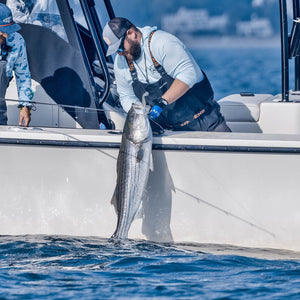
Picture Perfect Fishing Shots

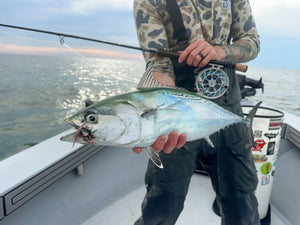
Great example of proper fish photography. The setup with the sun facing a properly held fish makes the colors pop. Head is angled towards the camera, with the fish's eye in focus. The topwater fly still in the mouth tells the story. Photo by Jeff Lomonaco - Self-Shot on a Canon DSLR on a tripod placed on interval timer mode before getting the fish back in the water.
Most anglers who enjoy photographing their catch these days recognize the basic tenets of taking a suitable fishing picture. They realize early morning light and dramatic sunsets make for good mood shots, that fish held out a reasonable length from the body appear bigger in photos than fish held tight to the chest, and that setting up so the sun shines on the star of your shoot makes for sharper images and good color saturation.

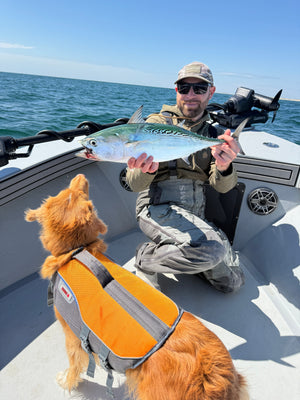
For shots with dramatic backgrounds, you still want the focus to be on your stars – the angler and the fish. OutdoorTom.com photo.
Those are solid starting points, but to really capture some super shots, it’s a good idea to simply put down your fishing rod and pick up your camera for a little while. Anglers often go on exotic trips and fish all day long, but casting for ten hours straight isn't always necessary. Taking just 30 minutes at some point to photograph the surroundings, a companion in colorful fishing clothing, or interesting close-ups of the catch will yield much better results. When shooting portraits or close-ups, always focus directly on the fish’s eyes. Focusing on the body usually leaves the eyes looking a little “soft.” Because humans are unconsciously drawn to eyes, make them count whenever possible by utilizing eye-tracking autofocus features if your camera has them.
Preparation is another key to better photos. You must be ready to shoot the second a fish hits the deck because once it starts to lose color, the opportunity for a great shot is gone. Even if the fish will soon be on ice, it should look pristine and fresh. Keeping a bucket of water or a washdown hose handy allows you to immediately rinse off blood so the fish stays clean and shiny. As a general rule, it also makes sense to limit photos to one fish per person, as large piles of fish rarely make for appealing images.

Vertical shots are a great way to show off big fish like this 30-pound cod taken just two miles off the South Shore of Long Island. Don’t forget your angler to smile. OutdoorTom.com photo.
Naturally, the fish and primary anglers are your usual focal points but be sure to also consider the background before snapping the shutter. While modern editing software can easily remove fishing rods, smokestacks, or landing nets from behind an angler's head, starting with a cleaner photo always delivers better end results. Additionally, using a wide-angle lens is essential on small boats, as telephoto lenses simply do not offer enough room to squeeze everyone into the frame.
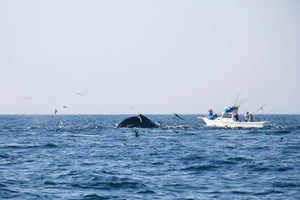
A common disappointment in fishing photography occurs when full-body shots fail to fill the frame with the subject, making even trophy fish look small. To fix this, zoom in on the fish or the upper body of the angler holding it; there is rarely a need to include anyone's feet in the shot. Today’s cell phones are often the most convenient choice on smaller boats due to their easy autofocus features and ability to quickly zoom in and zoom out. Overall, they do a great job under a wide range of weather and lighting conditions. Still, keeping a traditional camera with a powerful zoom lens secured and cushioned on the dashboard ensures you are ready for unexpected wildlife encounters, such as a diving osprey or a breaching whale that may be just a little far beyond the range that most cell phones can capture crisply. These unscripted moments are often the ones that truly make the day so have keep that full-frame camera handy if you are serious about adding some shots of breaching whales, sunning seals, or osprey and bald eagles power-diving for dinner.

You don’t need to squeeze in the whole fish to tell a great story. This halibut was photographed on an adventure to Alaska’s Tanaku Lodge. OutdoorTom.com photo.
Following are ten quick tips for taking superior fishing photos. Keep them in mind the next time you head out whether you plan to fish from shore or boat, and you’ll be well on your way to capturing some super fishing, boating and nature shots.
Quick Tips For Picture Perfect Shots
-
Get on it: Be prepared to shoot as fish come aboard. 15 seconds to a minute is all the time you’ll need to get a great photo and still have time for a live release.
-
Background check: Position the boat with an uncluttered background and be sure that fishing rods, nets, and gaffs have been removed from behind all subjects unless you plan to use them as props.
-
Factor the sun: Sunlight is the best light. Position the boat or angler so the light shines across the entire fish. Try to have the subject facing the sun, not the sun behind the subject. Backlit photos rarely look good.
-
Tilt that hat: Tilting hats up and using a little fill-flash helps eliminate harsh shadows on angler faces.
-
Size it up: Fish look larger when held out toward the camera, but don’t overdo it.
-
Shoot both ways: Look to take a mix of horizontal and vertical shots to add variety to your photo gallery.
-
Fill the frame: Zoom in on fish and the anglers that catch them to fill the frame. Full-length body shots make fish look smaller and can lack detail. Keep in mind that anglers don’t need to be in every shot. Sometimes, it's best to just zoom in on the fish itself.
-
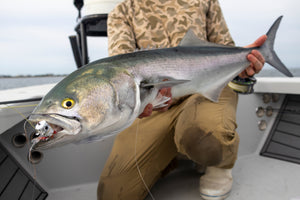
Tell a story: Show a lure, rod and reel, or net in your photo to help tell the story of how your prize was caught.
-
Polarize when you have bright, blue skies: To really make a blue sky “pop,” use a polarizing lens and shoot at a right angle to the sun.
-
Keep it fun: Anglers sometimes forget to smile when holding fish for photos. A quick reminder helps brighten most shots.
- Bryce Poyer