Shake Hands with Fat Albert, Part I

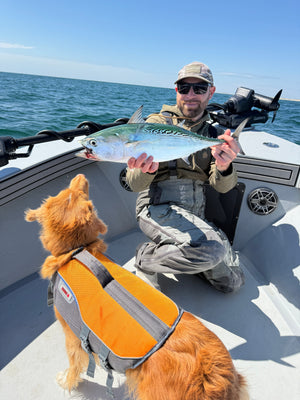
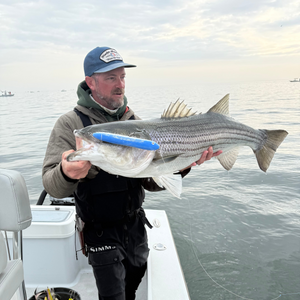
Holding the prize after a few blistering runs "out front" along the South Shore.
Photo by Jeff Lomonaco.
Have you felt a little crispness in the early morning air of late? Certainly, it feels refreshing after the heat of mid-summer, but it’s also a sign that fall fishing action isn’t far away. That’s enough to get a little adrenaline pushing through the veins of Long Island anglers - especially the ones who love to chase false albacore - for the arrival of these fish in late summer means fall fishing action is just around the corner.
Known affectionately as albies, Fat Alberts, hard tails and little tunny, these small members of the tuna family rarely exceed 12 pounds in local waters, yet few inshore gamefish can match their speed, power and fury once hooked. Their run typically begins in late August and builds toward a peak in mid-October, and their arrival is cause for celebration whether you fish from shore or a boat even though this species can be difficult to fool.

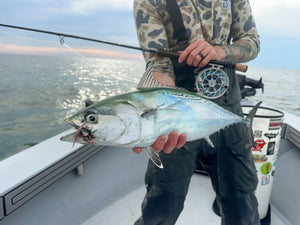
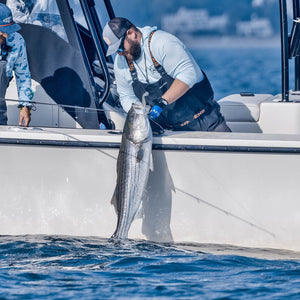
Anatomy of speed: a streamlined body, narrow caudal peduncle and powerful tail make the false albacore one of the fastest-moving fish inshore anglers encounter. Photo by Jeff Lomonaco
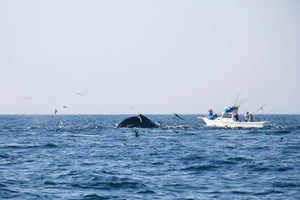
Like bluefish, albies really know how to put on a show as they pursue baitfish with relentless energy, but the two are easy to tell apart as they surface once you know what to look for. Albie pods run smaller and tighter than marauding blues, and they display a somewhat less ferocious demeanor even as they continue pushing forward at breakneck pace. Fewer terns and gulls dive over albie schools than over bluefish also, since the choppers slash indiscriminately and leave scraps behind while albies swallow prey whole. Watch closely and the deeper, football-shaped profiles of porpoising albies become unmistakable as they work through spearing, bay anchovies, sand eels and other rain baits. As compared to stripers on the move, the albies are much faster and produce a more refined splash as they pursue schools of small baitfish on the surface.
Timing and location matter enormously when it comes to tracking down the albie pods and getting yourself in position for success. These tiny torpedoes generally prefer to feed on top in calm conditions, often just after first light or again in late afternoon, and they’ll cover a tremendous amount of water in constant pursuit of bait. That restlessness is why experienced surfcasters often choose to stake out known hot spots rather than chase breaking fish along the beach. Many keep a rod rigged specifically for an albie encounter, even while targeting other species like stripers, since schools can pass in less time than it takes to tie on a new lure.
From the shore, beaches adjacent to an inlet, harbor mouth, or jetty, consistently draw these predators into the wash, and coves offer more close encounters as albies pin frightened bait against the shoreline before seemingly vanishing. Scanning ahead to the nearest cove or point often predicts where the next blitz will unfold, while scanning behind can reveal yet another school headed your way in a few minutes.
Boat anglers face a different challenge: false albacore spook easily and racing an engine toward a surfacing school is the fastest way to shut a blitz down. A smarter approach is to cut the engine well ahead of working fish and wait for the school to come into range. Any open water holding spearing, bay anchovies or rain bait is worth prospecting, and because Fat Albert favors clean water and strong currents, rips situated around inlet or harbor mouths consistently produce. Along lengthy beaches, look for significant coves and points to produce with regularity.

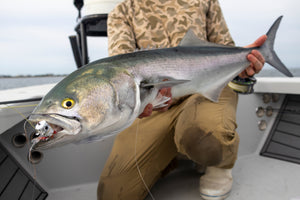
An epoxy jig at the ready, waiting for the next pod of albies to roll through the inlet. Photo by Jeff Lomonaco.
Because of their keen eyesight and propensity to keep moving forward at warp speed, most albies are caught on lures rather than baits. Thus, success with these tiny torpedoes usually comes down to matching the hatch and keeping things small. Since the typical albie probably weighs four to seven pounds and keys on small baitfish, they favor compact offerings worked quickly near the surface. Slender tins, epoxy minnows and soft-plastic baitfish imitations are the standard picks, since they mimic the bait albies key on and also cast well into the wind.
Effective albie lures include 1.25- to 2.75-ounce tubeless diamond jigs (available at the shop), Long Casting and Standard Deadly Dicks (7/8 to 1.75 ounces), Hogy Epoxy and Joe Baggs Resin jigs, soft-bodied jerk baits such as Albie Snaxs, and Joe Baggs Mini Sandeel soft plastics. Pair any of these to 7.5-foot fast-action spinning rod and a size 3000 to 5000 reel spooled with 20-pound-test braid preceded by a 4-foot, 20-pound-test fluorocarbon leader attached via a barrel swivel, and you should be all set. A Tsunami Forged Inshore Spinning Rod matched to a Daiwa BG MQ spinning reel is ideal for this application.
In Part 2, we’ll cover basic fly-rod gear for albies, along with drawing strikes and keeping these fish buttoned once you set the hook.
- Bryce Poyer