Spring Inshore Preview, 2026 - Part I

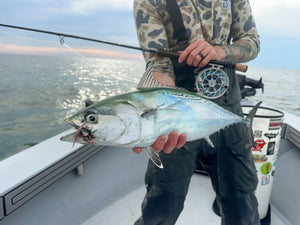
The late shift and soft-plastic swimbaits are a great spring combination for stripers of all sizes. OutdoorTom.com photo.
May brings warming weather – and warming waters – to Long Island’s East End. Already, bunker are on the scene and with them come stripers, fluke and a chance to tangle with weakfish as well. The season for all of these species, plus tasty scup, is already underway, so expect to see some significant pressure on local waters in the weeks ahead. Even so, now is the time to break the ice for it’s during the springtime bite that some of the the biggest fish of the year are taken right inside our bays. Following is a quick forecast for what you can expect in May and June while targeting your favorites on Peconic and Shinnecock bay.
Striped Bass: With bunker already flooding into the backwaters of both Shinnecock and Peconic Bays, the first reports of stripers are a matter of record with schoolies and a decent number of linesiders in the 12- to 15-pound class, plus a few fish pushing up against the 20-pound mark reported. With a little bit of warmer weather in the forecast now, early season hot spots like rivermouths and tidal cre
eks should become increasingly productive for those throwing topwater offerings and soft-plastic swimbaits. Reports have also pointed to some bass being in the ocean surf both east and west of Shinneock Inlet, so it’s definitely time to get your feet wet. Since most stripers caught these days need to be released, consider crushing down the barbs on your trebles to make unhooking an easier, safer and more conservation-minded task.

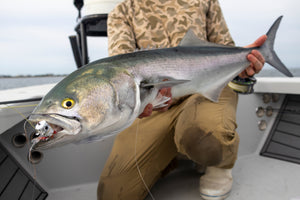
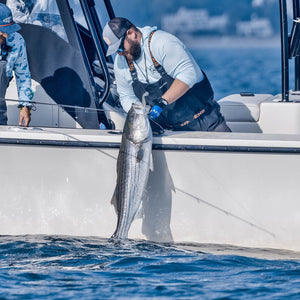
Crushing your treble barbs makes for easy releases with stripers of any size. OutdoorTom.com photo.
Those looking for fun with heavy-shouldered schoolies and keepers (28 – 31-inches), 4-inch Berkley Powerbait Power Grubs, Al Gag’s Whip-It Eels, Panther Martin BigFin™ Paddle Tail Swimbaits, 4-inch Got-Cha Curly Tail Grubs, and 5-inch No Live Bait Needed (NLBN) K-Tail soft plastics. If you hoping for catch and release action with bigger bass, fish the early- and late-shift hours tossing NorthBar Tackle BottleDarters, 6-inch SP Minnows, 5-1/4-inch sinking Yo-Zuri Crystal 3D Minnows, Metal-Lipped Gibbs Danny Surface Swimmers, Gibbs Casting Swimmers and Drifter Doc Spooks.
Durning May, look for these early bass to be most aggressive at the start of falling tides in relatively shallow water, and concentrate your efforts around back bay outflows, bridges, docks, and other obvious hard structure in both Peconic and Shinnecock bays. Jessup Neck, Cedar Beach and the South Race should be early season hot spots on Peconic Bay. The waters around Ponquogue Bridge and the shallow flats east of the the inlet are solid choices to spend on Shinnecock Bay. The latter can be especially good for surface strikes.
As June continues its warming trend, diamond jigs can shine in some of the deeper pockets and along sharp channel edges at Jessup Neck and in the North and South Race in Peconic Bay. Later in the month, expect the most consistent action and biggest fish to shift to Shinnecock Inlet, the ocean beaches, Plum Gut, The Race, and Montauk. You’ll need heavier gear and bigger lure choices like Andrus Bucktails or Swing Hook Parachute Jigs, OG Bucktails, and 2- to 6-ounce single-hook diamond jigs to connect in the stronger currents and greater depths of these bigger waters. Tip your bucktails with Fat Cow Eel Tail or Split-Tail jig strips to further improve your odds of success.
Early spring striper fishing may not be the sure slam it was a few years ago, but if you put in some time it can still be quite productive from now through late June.

Peconics spring porgy run features a shot as some real jumbo-sized scup. OutdoorTom.com photo.
Porgy: Steady action and limit catches should be the rule on Peocnic Bay, with solid hook-ups recorded from now through the end of June. For a shot at some truly magnificent jumbos, get out as soon as possible and concentrate your efforts in 20- to 30-foot depths around Jessup Neck, Rodgers Rock and the mouth of Noyak Bay. As the water may still be relatively cold when the season first opens, be mindful to use finesse techniques to tempt the scup for the first two or three weeks. At this point in the season, the porgies are more focused on spawning than feeding aggressively, so trim your two-hook porgy rig clam baits to smaller sizes, and lift slowly if you feel even the slightest weight at the end of the line. If the weight hangs on, set the hook and start cranking.
As June arrives, the scup should be spread across Peconic Bay, and will be available in 10- to 20-foot depths in Shinnecock Bay as well. Overlooked by many, the west end of Shinnecock Bay can also be a significant porgy hot spot this time of year on the start of outgoing water.
If you would like to increase your chances of weakfish by-catch in either bay, consider tipping one of your porgy hooks with a thin, 4- to 5-inch strip of squid. No need to upsize the hook for this. Size #2 snelled beaks or sproats are plenty strong enough to hold even a serious tiderunner as long as you take your time and don’t try to overpower a potential trophy on the way up. The small hooks also make it easy to release these fish – but do use a net as you lift any sizeable weakfish over the rail.
For more on Peconic Bay’s Porgy Pandemonium, go here.
Fluke: Last season witnessed an uptick in spring fluke scores and anglers are hoping this year will see more of the same. Given a decent flurry of action last September, too, it seems a reasonable expectation. While much of the fleet will concentrate efforts hoping for doormats right in front of the Shelter Island Greenlaws on Peconic Bay, a better idea might be to work the edges of flats just before they slide off into deeper water, or to drift along or right beside channels crossing the flats while staying in five- to ten-foot depths as much as possible. These areas tend to be warmer than the bay’s main channels and should be a smart May starting point considering the cold winter and chilly spring we’ve just experienced.

Fresh strip-baits can be a short cut to spring doormats. OutdoorTom.com photo.
Hi-low rigs and single-hook bottom rigs tied with size 3/0 – 4/0 Octopus style hooks work fine for fluke inside our east end bays and in ocean waters out to about 60 feet deeo. Many anglers, however, prefer to use bucktail jigs tipped with 4- or 5-inch Berkley Gulp! Saltwater Jigging Grubs, Saltwater Swimming Mullets or Saltwater Shrimp. If you would rather stick with natural baits, squid, spearing or fresh-cut 6-inch sea robin strips work fine. If looking strictly for doormats, you can also bait-up with a squid head, whole fresh squid, longer fish strip, or a Berkley Gulp! Saltwater 6.5-inch Nemesis on a larger bucktail or 4/0 hook.
As a rule, the real bait works especially well in May while the bucktails perform with distinction once the water warms up in June. White Water Outfitters Spin-N-Glow Fluke Rigs work particularly well in the bays starting in late May or early June. Jigging World Fluke Spoon Rigs are a super option for working in ocean waters over 30 to 60-foot depths later in the summer and into the fall.
To access Part 2 of our 2026 Spring Inshore Preview, go here.
- Bryce Poyer