Spring Inshore Preview, 2026 - Part II

Felicia Scocozza shows off a fine Peconic Bay spring weakfish. OutdoorTom.com photo.
Picking up where we left off in Part 1, all the major spring players have already arrived on the scene and each warming day over the next couple of weeks should bring improving action. While stripers, fluke and porgies take center stage for much of May and June, a strong supporting cast adds additional thrills and variety to the spring bite.
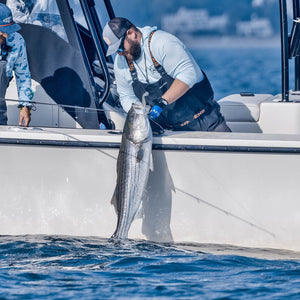
Bluefish, of course, are known for their aggressiveness and can easily be tempted to provide awesome surface strikes this time of year. Weakfish prefer to remain unseen most of the time, but you’ll find them patrolling the edges of the porgy schools while hanging deep to avoid any marauding blues that decide to cut through the scup. Blowfish are always a tasty and interesting by-catch for porgy pullers, but there are enough around these days to target specifically if you know where to look. Black sea bass don’t come into play until June 23, but the first two or three weeks of the season see some really big fish on local inshore wrecks. You’ll want to get on them before most of the humpbacks get culled out.
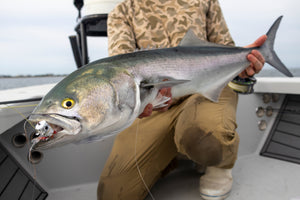
Bluefish: The past several springs have seen some mighty large choppers patrolling the waters of both Peconic and Shinnecock bays during May and June. Frequently, you find these fish scrounging around in the back bay shallows, causing havoc amongst bunker schools in the vicinity of Peconic River and various creek mouths, or tearing into porgies and juvenile weakfish in some of the deeper holes in Noyak and Little Peconic bays, Jessup Neck or Orient Harbor. They can also be found patrolling the flats east of Shinnecock Inlet, running the inlet itself, slicing through the fast currents that flow around the Ponquogue Bridge, and in the western part of Shinnecock Bay off Pines Neck Point.

Big blues patrol Long Island’s East End in May and June.
Favored offerings for the choppers include diamond jigs, of course, but it’s hard to beat a topwater smash from one of the inshore scene’s apex predators. Tossing 247 Lures Sea Special Pencil Poppers should work especially inside or close to Shinnecock Inlet and Ponquogue Bridge when ‘gators are on the prowl. These excel in rough water and fast currents, don’t roll sideways like some other pencils, and cast a mile even in significant winds. Al Gag’s Heirloom Popper is another good bet and can be used to tempt blues weighing from two pounds and upward. Its rattling action can really call in the fish even when the choppers seem more subdued than usual. Atom Atomizer Poppers, which despite the name can also be used as a sub-surface swimmer, are another smart choice. For smaller bay blues, Creek Chub Striper Strike Poppers will get the job done and might connect you with some school bass as well.
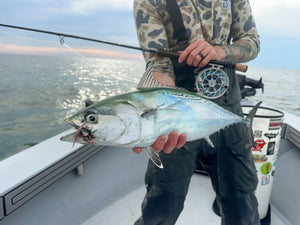
Weakfish: Weakfish catches have continued to improve over the past couple of spring seasons, with larger sizes being recorded each year. Last season saw a few hit the 6- to 8-pound mark in Peconic Bay, and its likely similar fish patrol the western waters of Shinnecock Bay as well.
That said, most weakfish can be expected to range from shorts to about 4-pounds. Although some anglers target them specifically, a fair percentage are caught as by-catch when porgy or fluke fishing. While no one will complain about a big weakfish grabbing their hook, catching 2- to 4-pound schoolies can be a blast on light spinning tackle. Just be sure to stay within your single fish daily limit and 16-inch minimum size requirement.
If targeting the weakfish specifically, a White Water Outfitters Hi-Low Sea Bass Rig with size 2/0 octopus style hooks and glow or orange beads pairs well with a 2- to 4-ounce sinker and can be used with medium-light spinning or conventional gear. Bait up with 5- to 6-inch long by ½-inch-wide strips of squid. If you would rather go the lure route, 1- to 2-ounce OG Jigs Big Eye and Fish Eye Bucktails tipped with squid or a 4- to 5-inch Berkley Power Mullet work well, as do plain, single-hook diamond jigs of the same weight.
Work the bucktail with short lifts of the rod while drifting channel and pocket water edges, making sure to contact the bottom a few times per minute. With the diamonds, drop them to the bottom, crank up ten turns, and then allow the jig to free-fall to the bottom again. Repeat until you get a smack.

Blowfish numbers have increased in recent years. Look for them in relatively shallow areas with sand or gravel bottoms and light to moderate currents. OutdoorTom.com photo.
Blowfish: We’ve seen some very decent blowfish action over the past few springs. Most anglers catch the puffers as by-catch when porgy fishing, but there are enough around now to target them on purpose.
The key to consistent blowfish scores is to fish relatively shallow depths of 10 feet or less, preferably with a sandy or gravel bottom. Oftentimes the best action can be found in shallow channels not far off the beach, over gravel bottom, and in five- to eight-foot depths in lightly pressured areas of significant coves. A simple bottom rig or White Water Outfitters 2-Hook Porgy Bottom Rig with size 1 hooks baited with a small piece of clam or piece of squid works well. To significantly increase your chances of success, hang a chum pot filled with ground clam over the gunwale.
It’s good to see the blowfish numbers continue to increase. We recommend being selective with size and tossing the smaller ones back even though there is currently no size limit on this species.

Black sea bass numbers continue to climb. Look for the biggest fish to be caught as the season first gets rolling. OutdoorTom.com photo.
Black Sea Bass: No doubt 2026 will see plenty of sea bass season once anglers are allowed to pursue them come mid-May. Anglers often encounter this tasty battler while porgy and fluke fishing inside the bays, but the near-shore ocean wreck and reef action is where you want to be if you can get there.
Sea bass stocks are at their highest point since 1990 and continue to trend upward, so get out and have some fun enjoying a little bit of basic bottom-fishing on nearby Shinnecock Reef. It’s only a 2-mile ride from the inlet in 75- to 85-feet of water, and it features a mix of diverse structure on the bottom including sunken vessels, barges, armor units and bridge rubble. Be sure to bring along extra rigs, lures and sinkers since you will lose a few here from time to time.
Sea bass will fall for clams, squid, Berkley Gulp Baits, and even diamond jigs as long as offerings are kept with a foot or two of the bottom. During the spring, they tend to hit best at the start of outgoing water - but they will bite on a rising tide nearly as well in June and early July.
Registry and Regulations
Before loading up your gear and heading off to hit the hot spots, saltwater anglers age 16 and older will need to sign up for the free annual New York State Marine Recreational Fishing Registry. For a full listing of current NYS Saltwater Fishing Regulations, visit the DEC’s Recreational Saltwater Fishing Regulations page.
- Bryce Poyer