Now is the Time For Winter Maintenance

If your gear looks like this at the end of the season, that's ok! It means you've been using it. Now, it's time to do the maintenance to keep them going for the upcoming season and beyond!
How much did you spend on your last rod and reel purchase? If you’re like most Long Island anglers, you probably did a double-take at the price. There’s no doubt that the cost of quality fishing gear trends towards the higher end these days, even at a shop like ours that provides enough choices to match nearly any local target species with affordable, mid-range and high—end gear options.
Considering the costs – it’s not unusual for a quality rod and reel inshore combo to run well over $300 in the current market - it’s never been more important to think of your purchases as being investments that will need a little TLC now and then to ensure they’ll provide years of high performance. With that point in mind, mid- to late winter is the ideal time to schedule in some maintenance sessions.
You’d be surprised how much a little TLC each winter can extend the ability of your reels to work at peak performance and survive the beating a marine environment can dish out. If you fish saltwater on a regular basis, every rod, reel and piece of equipment you use should get a full inspection and If you fish marine waters, especially, every rod, reel and piece of equipment that sees use on a regular basis should get a full inspection well before the season starts. That will allow you do some serious scrubbing, apply some light oil where needed and uncover things like sticky drags and gears that might need a little professional help from our staff.

While reels, rods and electronics are among the more costly items you’ll want to closely inspect, it’s smart to shine some light on other items that see regular use as well. Check your nets for tears, weakened hoops and binding that might prevent them from being fully extended. Check gaffs, pliers and knives for rust spots and handle damage, and plan on spending a little time replacing the hooks on your favorite plugs, surface lures, bucktails and diamond jigs if they have begun corroding or if their hooks show any signs of bending from big fish.
Really, the most important thing with reels and rods is to choose models rated for saltwater use if you plan to use them in the ocean, bays or Long Island Sound. That’s the starting point from which all other care begins. Any rod or reel that catches even a little bit of saltwater spray on your fishing adventures needs to be washed down at the end of the trip. At least once a year, thoroughly clean and wipe reels, rinsing them off with freshwater to dissolve the salt, opening the body to replace the grease which often holds sand and grime, checking the drag to make sure it’s functioning smoothly without herky-jerky starts and stops, placing a few drips of oil around the handle, and wiping down reel with a clean rag and light touch of WD-40 or similar oil/lubricant to protect the finish. Change the line, too, if it appears worn or has been in use for more than a season or two.

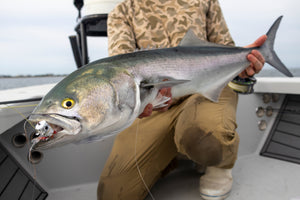
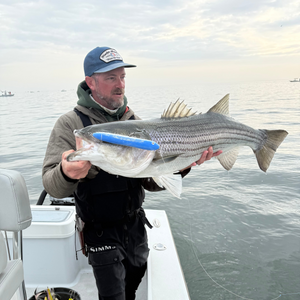
Many anglers end their season on one of the most tackle-abusing species there is! OutdoorTom.com photo.
For rods that see action in the briny, begin with a thorough freshwater cleaning and wipe-down, followed by inspection of all guides and the rod-tip for grooving from braided lines. You’ll also want to check for rust, nicks, chips or burrs, all of which can be easily uncovered by running a cotton swab along the guide rings and feet, as the threads catch on burrs and imperfections.
While the yearly cleanings are absolutely necessary, incorporating basic maintenance into your daily fishing routine can also save a lot of headaches. Give rods, reels, nets and gaffs a quick freshwater washdown as soon as you get back to the dock or park your trailer. Clean your cooler immediately after emptying, and wipe down electronics packages, too, as per the manufacturer’s instructions. Also, be sure to discard any dull, rusty or bent hooks and make note if you need to buy replacements.
Even with proper care, some rods and reels will end up needing professional care. If you have reels that don’t work smoothly after home cleaning, bring them in for some tender love and care or ship them back to the manufacturer if they are still under warranty. Realize, too, that there’s nothing wrong with dropping off several rods and reels for professional maintenance – as long as you do so several weeks before needed as repairs can take a while these days given supply chain limitations on replacement parts. That’s another reason why you want to get on the maintenance track right now – the later you wait, the greater your chances of starting the new season without anything turned in after early March.
In sum, pretty much any piece of serious fishing gear will benefit from a winter inspection, wipe-down and TLC. In the long run, proper care can make a very positive difference in how long your gear lasts and provides peak performance if saltwater fishing is your passion. Even small, stainless steel items like fishing pliers, hook outs, knives and scales can benefit from a winter inspection and serious wipe down. In the long run, keeping on top of your gear from a from a maintenance standpoint can extend its life by several years – saving you big bucks compared to replacing your favorite items. Even more importantly, it could be the difference between landing the biggest fish you’ve ever hooked or dreaming about “the one that got away” for the rest of your days.”
- Bryce Poyer