Becoming A Better Angler

Heading out on an open boat is a great way to make sure you are in the right spot and ensures you’ll have help learning the ropes.
The quest to become a more successful angler is universal amongst those bitten by the fishing bug. Whether drawn initially to the sport by the fun and excitement of pursuing the trophy of a lifetime, bonding with family and friends, icing their own catch, or simply heading out on solitary sojourns for a little peace of mind, the ultimate rush ultimately comes from conquering the learning curve rather than the size and numbers of fish caught. For many fishing novices, that thirst for knowledge evolves into a life-long pursuit of attaining master angler status, the irony being that the game itself can never be fully mastered.
Indeed, fishing for beginners often sees a struggle to understand such topics as the influence of tidal movement, matching the hatch, recognizing prime habitat, using fish-finding electronics, and which bait or lures are best. Take solace if new to the game, though, because even the kings and queens of the sport are humbled from time to time – a primary trigger that keeps them coming back for more. But what exactly are the qualities of a superior angler? The list is headed by a strong desire to understand as much as possible about the quarry, the drive to learn and test newly acquired skills, and serious attention to small details. Keep in mind, too, that patience is indeed a virtue in this venue for there is simply no way to learn everything all at once.

Fast-biting species like scup and blowfish are always a hit with kids. Photo by OutdoorTom.com
So, what are some tips for beginning piscators? The most important one is to keep things simple. Truth be told, you need only basic gear to start scoring on a regular basis with most inshore target species. Most anglers start out with either a basic spinning rod and reel combo for casting situations or a conventional set-up for bottom fishing. If you’re not sure what these fishing outfits are or how to choose between one and another, a stop by the shop is your best bet. Our staff can suggest a reasonably affordable rod and reel combo, plus a few select lures or bait-fishing rigs tailored specifically to your skill level and the species you hope to catch. A quality setup for fishing beginners should run under $200 in most cases and could cost considerably less based on your target species and the manner in which you’ll be fishing.
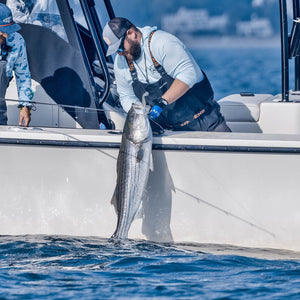
Another good idea is to ask if you can tag along on a trip with a fishing friend or relative because nothing beats learning from someone with first-hand experience at the game. If you don’t have a buddy that fishes, hopping aboard an open boat or hiring a guide or charter skipper to take you out are also good options. The captain or crew in this scenario will show you a couple of general fishing hot spots, provide personal instruction on how to best tempt, hook and land the fish you seek, and will even clean any fish you decide to take home (sometimes at an extra fee). As a rule, beginning anglers, kids especially, appreciate fast action more than conquering big fish that come few and far between and require more skill to deck.
You’ll also need to learn a few fishing knots before heading out, and read up a bit on how to find fish to help get yourself started. If you plan to keep some fish for dinner, you’ll want to research caring for your catch as well.

Peconic Bay’s school weakfish are a dependable target in May and June, and again in September.
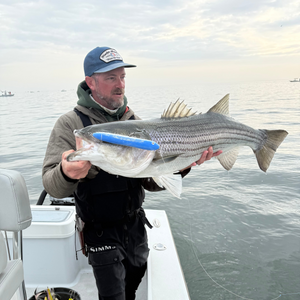
When it comes to releasing fish, catch, photograph and release (CPR) is the rule to follow. Being careful to avoid any spines or teeth, hold your catch with wet hands and without using a rag, handle it as little as possible, and get it right back in the drink if you aren’t taking it home for dinner. A good rule of thumb is to keep fish out of the water no longer than you can hold your breath. With a little practice, that leaves just enough time to unhook your quarry and snap a quick photo. As for keeping fish, be sure to check local regulations as to size and creel limits, fishing licenses and/or permits needed.
How long does fish last in the refrigerator? That’s another question frequently asked by novice anglers. While some species might make it longer, figure five days as a safe bet before you’ll need to move it to the freezer. Those that are frozen can be eaten for up to a year or so but generally taste best over the first three or four months.
Keep in mind, too, that you don’t have to keep everything you catch. In fact, the fewer fish you bring home, the more you’ll need to go fishing to restock your freezer. That, believe many veteran anglers, is a trade that’s hard to pass up.
- Bryce Poyer